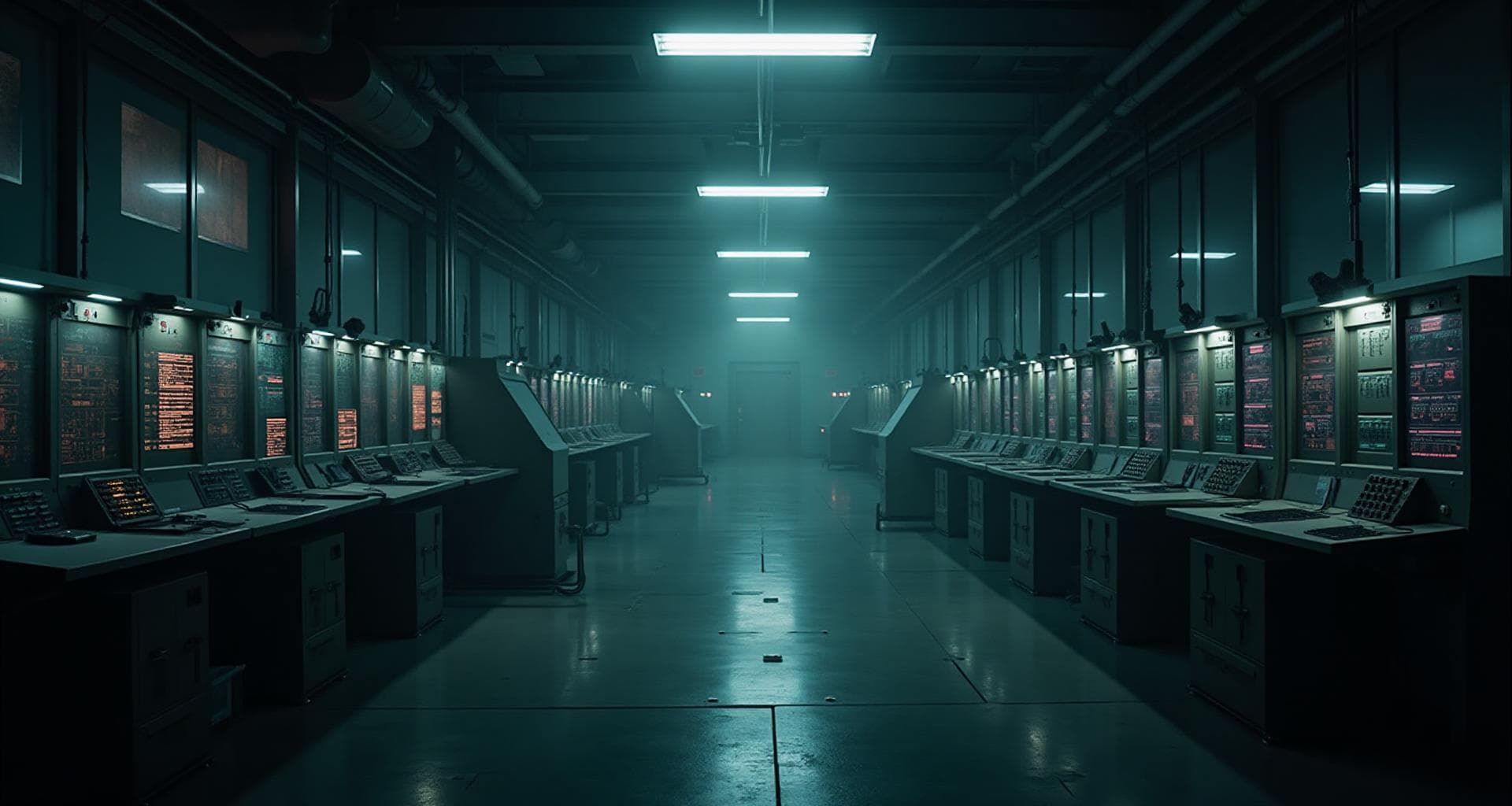
Why Industrial Data Stays Local
In most industrial environments, data is not shuttled off to a distant cloud. It stays inside the walls of the plant, routed through Distributed Control Systems (DCS) and SCADA solutions that have been the backbone of automation for decades. These systems are robust, designed to keep processes stable, safe, and predictable even if the outside world disappears.
The philosophy is simple: never trust the network. Many industries — petrochemical plants, power utilities, even food and pharma production lines — operate on the assumption that they may be cut off. Remote connectivity is treated as an enhancement, not a necessity. Uptime depends on local control, and local control depends on localized data handling.
The Limits of DCS and SCADA for IoT Data
Yet this model, while reliable, is showing strain. A DCS is very good at running loops, executing setpoints, and enforcing alarms, but it was not designed for the sheer volume and complexity of today's Industrial IoT data. Modern plants bristle with thousands of sensors, each streaming continuously. Operators are overwhelmed by alarms. False positives dull vigilance. Subtle anomalies — the kind that hint at tampering, degradation, or early failure — slip through unnoticed.
Where Edge Computing Fits In
This is where edge AI adds something fundamentally new. Instead of replacing the DCS, it complements it by doing the kind of analysis traditional control systems were never built for.
-
Localized inference: An edge node can sit beside the DCS, consume the same telemetry, and run anomaly detection in real time. No dependency on external connectivity.
-
Offline intelligence: Because the models run on-site, they keep working even if the plant is cut off from the internet. In fact, the harsher the connectivity constraints, the more valuable local AI becomes.
-
Contextual alarms: Instead of raising yet another red light, AI can generate explanations — why this deviation matters, how severe it is, what the likely next step should be. This helps operators cut through alarm fatigue.
-
Adaptive insights: Unlike static alarm thresholds in a DCS, AI can adjust to seasonality, slow drifts, or cross-correlations between signals.
The result is not about discarding the proven reliability of DCS/SCADA, but about giving it a partner that can interpret the growing flood of data. In industries that are offline by design, edge AI essentially becomes the "thinking layer" that lives in the same room as the process.
Offline-First as a Design Principle
This matters because the threats facing industry today are evolving. Attacks no longer target only IT networks; they manipulate sensors and controllers. Failures are no longer always sudden; they emerge as slow drifts in telemetry. Traditional control systems keep the plant running, but they do not always recognize when it is running into danger.
By embedding AI at the edge — within the same air-gapped networks that the DCS trusts — industry gains the ability to spot problems faster, explain them better, and respond before they cascade. In other words: edge AI brings foresight to a domain that has historically focused only on control.